In the times of the Inca, success and a prosperous life were based around the yearly harvest. To ensure a good harvest, you had to pay tribute to Inti, the sun god. These tributes were paid every year during the days surrounding the winter solstice as a celebration for leaving the wet season behind and entering the hot yet prosperous dry season. Some unofficial lore that we heard while in Ecuador was that an Inti Raymi wasn’t a good one unless a sacrifice was made. I guess as things have worked out, over the years the Inti Raymi celebrations in Cotacatchi have taken this sacrifice a step further. The locals say it isn’t a proper Inti Raymi without at least a few people dying. In a world of pesticides and fertilizers, it is clear that there is probably little correlation between deaths at a festival and the success of a crop, however it still makes for an interesting show; one that Holly and I did our best not to miss.
We were fortunate enough to spend a lot of our time in Ecuador on the Geer’s farm right outside of the neighborhood La Calera. Now if you tell people you live near La Calera, the general response is “very dangerous” or something along those lines. Apparently La Calera has a history of housing drug dealers, gang bangers, etc. but we had no such experience. Most of the people who did jobs on the farm (i.e. hanging gates, laying concrete floors, cutting trees, buying pigs) were all from the neighborhood and were great people. Traditionally, however, the story goes that someone from La Calera got in a fight with someone from a neighboring ‘hood, stole a cow from them, and roasted it at a big party. I think the bias against La Calera harkens back more to this and their role in the Inti Raymi celebrations than anything modern, but what do I know.
The main event of Inti Raymi, in Cotacachi at least, is the traditional “dancing” around the main plaza. This dancing is really just drunken marching, but it is still fascinating to see. The night before the big day, the locals in the neighborhoods, from unknown genesis, begin marching from door to door, picking up strength in numbers as they go. This all happens late at night and carries on for quite some time. The next day, this group of hoodlums make the march from their respective neighborhood to the main plaza to march around it a couple times, take a break, and then continue marching. This is all steeped in delicious pagan tradition, and the garb the people wear looks something like thousands of witches getting ready to serve their country. Tall pointed black hats, furry goat-haired chaps, and a lot of camo make up the outfit with the chaps supposedly use to help protect their legs during the “traditional fighting.” Our friends in La Calera apparently make up the most enthusiastic and largest group of dancers.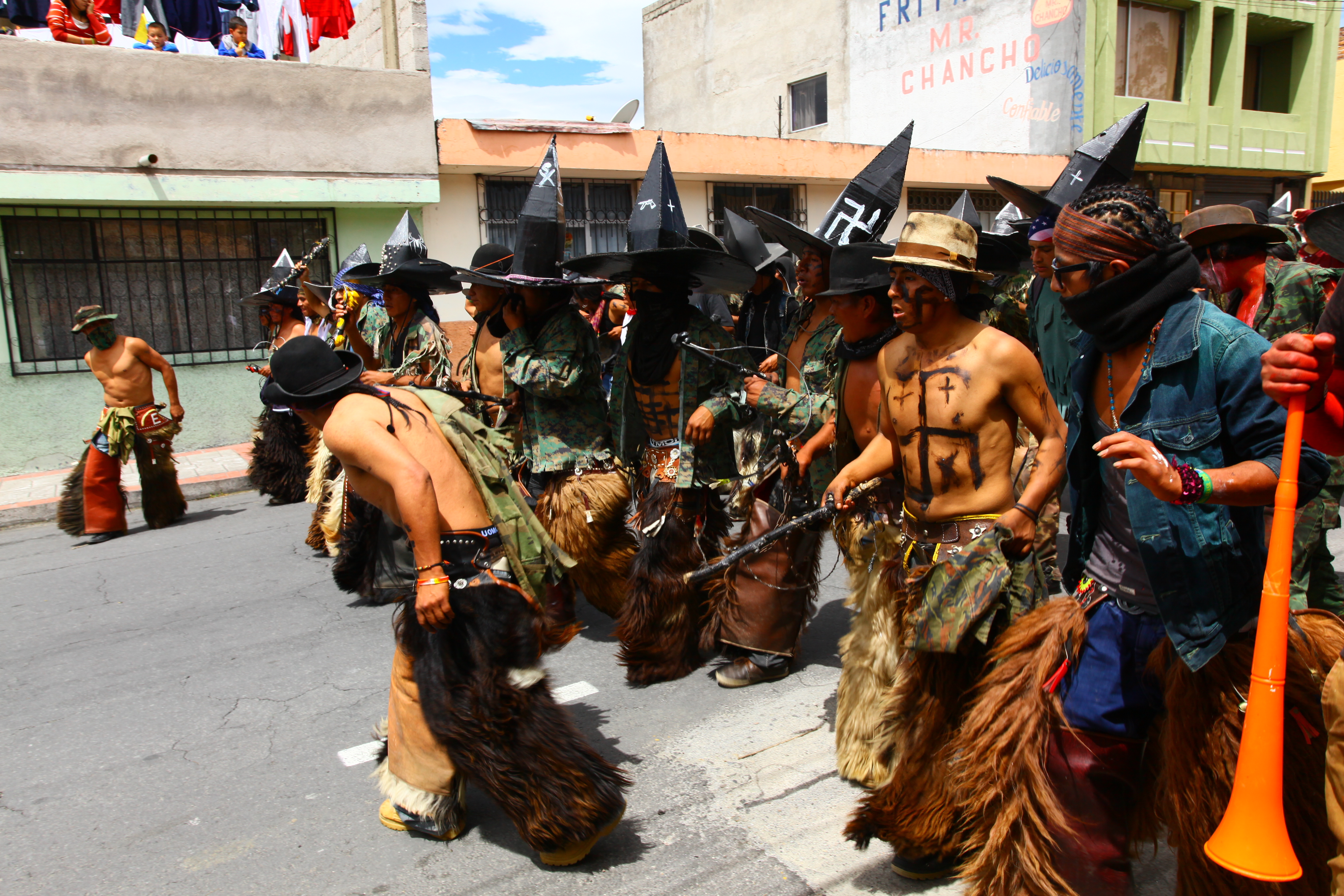 History aside, overall its just a big party. Public drinking is encouraged but it stays relatively sane until night time, which Holly and I never made it to. Talk to any local and they will warn about staying too late as that is when the police start firing tear gas to dissipate crowds and end the long day of neighborly tension. Naturally, we also ran into our saddle making buddies and we chatted with them for a lot of the time. They filled us in on most of the details you read above. Either fortunately or unfortunately, the day we saw the big parading in the main plaza was our last day on the farm before we headed to Cuenca, so from there we said goodbye to our saddle making friends, returned to the farm to say goodbye to the Geers, and allowed melancholy to wash over us as we got in the cab to leave the place we were lucky enough to call home.


 Routes Not Found